How Hardware Keyloggers Work
A hardware keylogger sits between the keyboard and the computer, capturing keystrokes at the physical layer — not visible to the operating system, drivers or antivirus.
Capture at the physical layer
A hardware keylogger is a small pass-through device that plugs in between a USB keyboard and the computer. Every keystroke travels through the device before it reaches the USB host controller, so the logger records the data at the physical layer — before any operating-system process, driver or security tool can observe it.
Because there is no software installed on the target machine, the logger leaves no process, no driver and no file for antivirus or endpoint tools to find. The computer simply sees a normal keyboard.
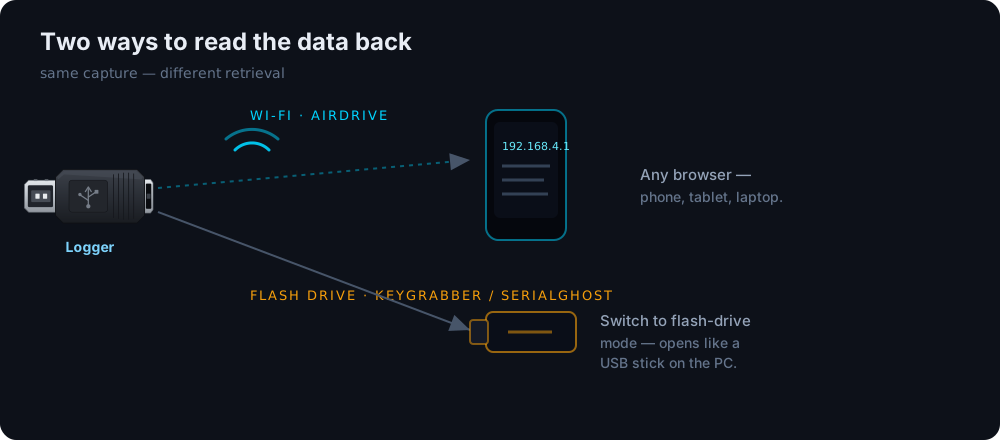
Two ways to read the data back
There are two broad families of device, and they differ only in how you retrieve what was captured:
- Wi-Fi (AirDrive): the device hosts its own wireless access point. Connect from any phone, tablet or laptop and read the log in a browser — no physical contact required. Pro and Max models add scheduled e-mail reports and live keystroke streaming.
- Flash drive (KeyGrabber, SerialGhost): the device stores keystrokes to onboard flash. To read the data, switch it into flash-drive mode and it appears as a standard USB mass-storage device.
Form factors
The same electronics ship in several disguises: an ultra-compact inline dongle, a USB extension cable, a bare module for embedding inside a keyboard, or a complete keyboard with the logger built in. The smaller the module, the harder it is to spot during a physical sweep.
Responsible use
Hardware keyloggers are professional tools for digital forensics, penetration testing, IT security audits and authorised monitoring. Always ensure you have the legal right to record activity on the equipment in question.