Time-Stamping — Knowing Exactly When Something Was Typed
A time-stamping keylogger records not just what was typed, but the precise date and time of every keystroke — turning a flat log into a timeline you can correlate.
A plain keystroke log tells you what was typed. A time-stamping keylogger tells you when — down to the second — and that single addition changes what the log is good for.
Why the "when" matters
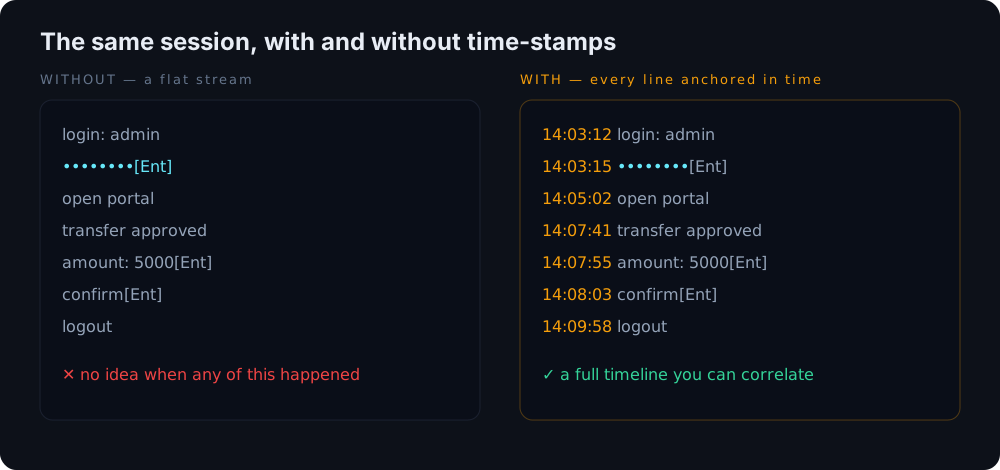
Without times, a log is one long stream of characters with no anchor. You can read the content, but you can't place it in a sequence of real-world events. Add a timestamp to each keystroke and the same log becomes a timeline: you can see how long a task took, when a session started and ended, and line the activity up against door logs, CCTV, or system events.
How it works
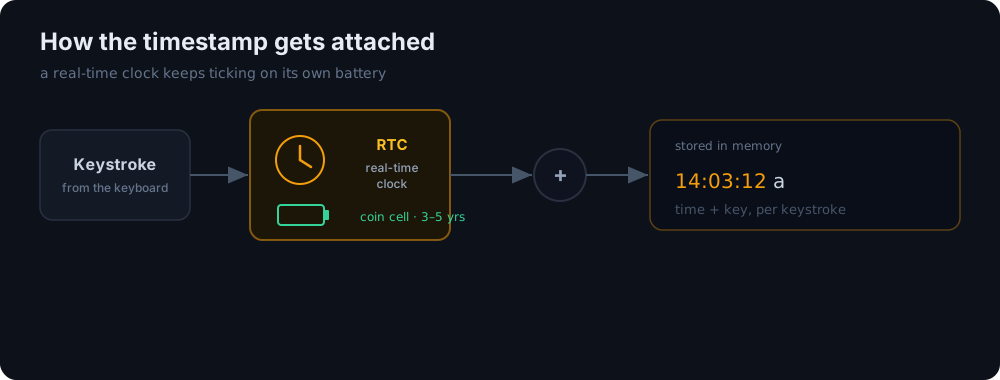
Time-stamping needs a clock that keeps running even when the device is unplugged. Time-stamping models (like the KeyGrabber TimeKeeper) include a real-time clock (RTC) backed by a small coin-cell battery. The battery powers only the clock circuit and typically lasts 3–5 years; logging itself still draws power from the USB bus.
When a key is pressed, the device pairs the keystroke with the current RTC time and writes both into memory.
What you get in the log
Each entry is prefixed with a date and time, so retrieval gives you a chronological record rather than an undifferentiated block of text:
14:03:12  login: admin
14:03:15  ••••••••[Ent]
14:07:41  transfer approved
14:09:58  logout
Who needs it
- Investigators and law enforcement — correlating typed activity with a timeline of events is often the whole point of the evidence.
- Employers and IT — understanding when work happened, not just that it did.
- Anyone reconstructing a session — the gaps between timestamps reveal pauses, waiting and pace.
Bottom line
Time-stamping upgrades a keystroke log from "what was typed" to "what was typed, and exactly when." If your work depends on reconstructing a sequence of events, choose a time-stamping model such as the KeyGrabber TimeKeeper — or an AirDrive Pro/Max, which adds time-stamps alongside Wi-Fi retrieval and live streaming.
Authorized use only. Time-stamped logs are powerful evidence — capture them only on devices you own or are authorized to monitor.