Who Uses a Hardware Keylogger? Real-World Use Cases
From employers and parents to investigators, IT teams and retailers — a look at who relies on hardware keyloggers, and the authorized jobs they do.
A hardware keylogger is a neutral recording tool. What matters is who is using it and for what authorized purpose. Here are the audiences that rely on them, and why.
Employers
For workplace oversight on company-owned equipment (with employee consent and within local labour law):
- Monitor productivity and acceptable internet use.
- Detect unauthorized access attempts on shared machines.
- Keep a backup of typed text and usage statistics.
Parents
For protecting minors on a family computer:
- Observe web, email and chat activity.
- Shield children from online predators and hazards.
- Keep a copy of what was written.
Investigators
For forensic work where reliability and stealth matter:
- Retrieve evidence in an operating-system-independent way.
- Recover unknown passwords typed at the keyboard.
- Monitor a machine without installing anything that could be detected.
IT administrators
For keeping infrastructure healthy and accountable:
- Collect computer-usage statistics.
- Detect unauthorized use of equipment.
- Audit access on sensitive workstations.
Law enforcement
For lawful investigations with proper authority:
- Collect computer-related evidence for security and forensic purposes.
- Work independently of the target's operating system and security software.
Retail, shops and warehouses
A less obvious one — because these devices also capture barcode-scanner traffic (a scanner presents as a keyboard):
- Keep a history of scanned data across points of sale.
- Reconcile inventory and track equipment usage.
Reading the data back
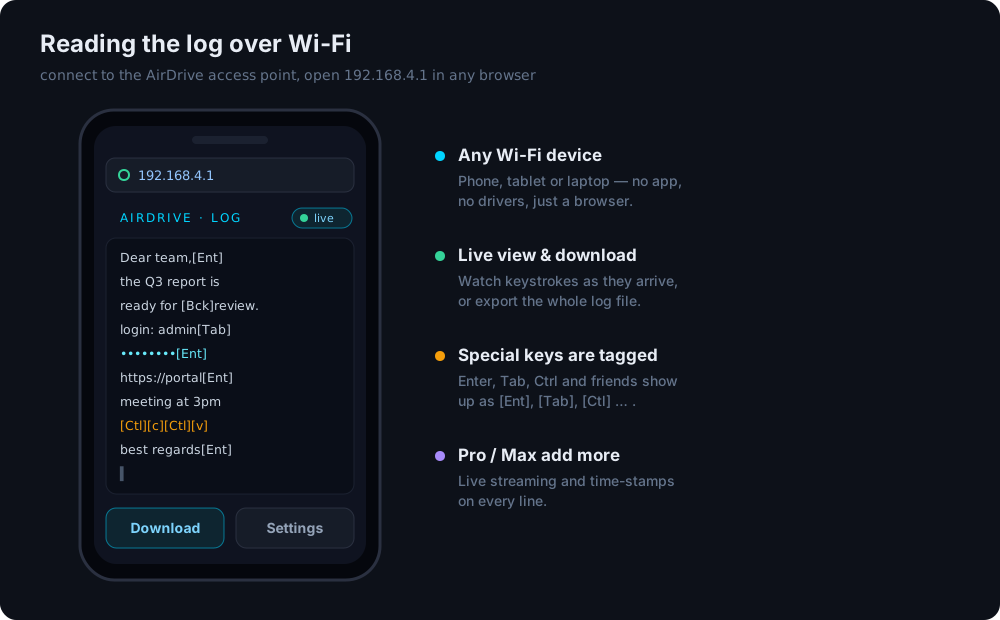
Whatever the use case, retrieval is the easy part. With an AirDrive model you connect to its Wi-Fi access point and open the log in any browser — no software, no drivers.
Bottom line
Employers, parents, investigators, IT teams, law enforcement and retailers all use hardware keyloggers for legitimate monitoring, forensic and record-keeping tasks — precisely because they're OS-independent, install-free and invisible to software. Explore the use cases and product range to find the right fit.
Authorized use only. Monitor devices you own, or others' devices with informed consent or proper legal authority. Covert monitoring of another person's computer is illegal in most jurisdictions.